Within UFO Crashes
What Better UFO Evidence Would Look Like
NASA's UAP study emphasised calibrated sensors, multiple observations and transparent analysis instead of relying on anecdotes alone.
On this page
- Why current UAP data are often inadequate
- The value of calibrated multi sensor records
- Transparent analysis and reproducibility
Page outline Jump by section
Introduction
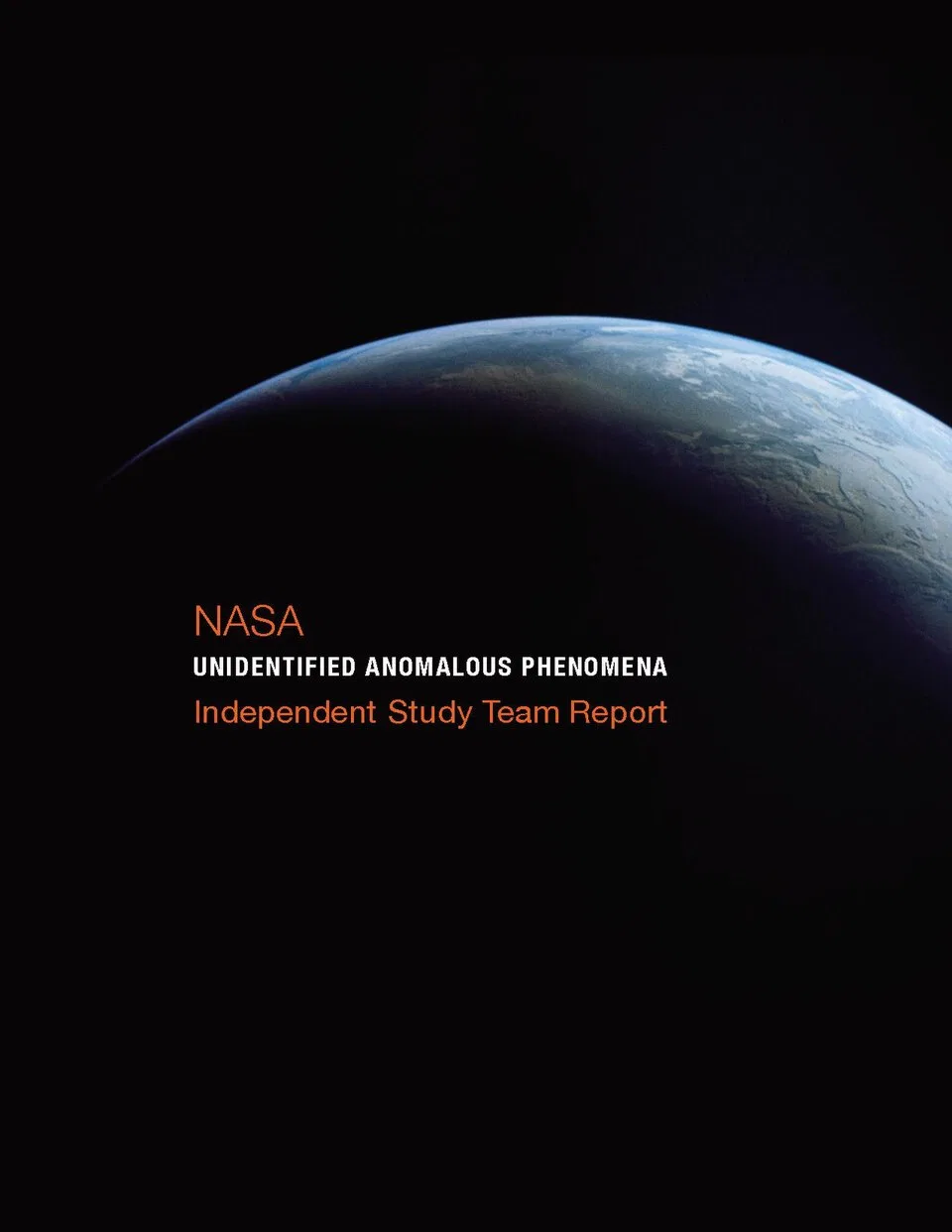
NASA’s standard for assessing extraordinary UFO claims is not a special rule that automatically dismisses unusual reports. It is an insistence that the evidence must be strong enough to distinguish a genuinely anomalous object from ordinary aircraft, balloons, atmospheric effects, camera artefacts and errors of distance or perspective. In practice, that means calibrated instruments, accurate metadata, observations from more than one sensor, known environmental conditions, testable hypotheses and analysis that independent researchers can inspect and repeat.
This matters directly to alleged UFO crashes. A dramatic witness account, a blurred image or an unidentified fragment may justify investigation, but none can establish an extraterrestrial crash without reliable measurements and a traceable evidential record. NASA’s 2023 independent UAP study found that the present record is generally too sparse, inconsistent and poorly characterised to support firm scientific conclusions. Its central intervention was therefore not to reinterpret famous cases, but to describe how future evidence should be collected.[nasa.gov]science.nasa.govNASA Science…
Why current UAP data are often inadequate
The first obstacle is that most UAP observations are accidental. A pilot, surveillance system or member of the public notices something unexpected, but the instrument was usually designed for navigation, targeting, weather monitoring or ordinary photography rather than for measuring an unknown object. Its settings may change automatically, its image may be compressed, and important information may never be saved. NASA’s panel concluded that existing UAP analysis is repeatedly hindered by poor calibration, missing metadata, a lack of simultaneous measurements and an absence of baseline data showing what the same sensor normally records under similar conditions.[NASA Science]science.nasa.govNASA Science…
A photograph can therefore look impressive while remaining scientifically weak. Without a dependable distance, for example, researchers cannot calculate an object’s true size or speed. A small nearby object and a large distant one may occupy the same number of pixels. Apparent rapid movement can also be produced by the motion of the camera platform, magnification changes or parallax—the shifting apparent position of an object when seen from a moving viewpoint. NASA specifically noted that determining distance is essential before claims of extraordinary velocity or acceleration can be tested.[NASA Science]science.nasa.govNASA Science…
Metadata are equally important. They include the time and location of recording, the sensor model, operating mode, exposure, field of view, sensitivity, noise characteristics and details of any image processing. These records allow investigators to reconstruct what the instrument could and could not have measured. Without them, unusual shapes, wakes or rotations may be properties of the recording system rather than the object itself. In one example reproduced in NASA’s report, an apparent atmospheric disturbance around an object filmed over South Asia was assessed as a likely video-compression artefact; the object itself was considered probably to be a commercial aircraft.[NASA Science]science.nasa.govNASA Science…
Eyewitness testimony remains useful, particularly for identifying when and where an event occurred, describing its apparent behaviour and directing investigators towards other records. NASA did not suggest that witnesses are necessarily dishonest or incompetent. Its narrower point was that a report cannot be rerun under identical conditions, and observers cannot usually quantify perception errors, environmental effects or mistaken estimates of range and speed. Testimony can therefore generate a hypothesis, but it rarely supplies enough information by itself to falsify ordinary explanations.[NASA Science]science.nasa.govNASA Science…
For UFO-crash allegations, these problems become even more serious. A claimed impact requires evidence that an object actually reached the ground at the reported location, followed by documented recovery, secure handling and laboratory examination. A later recollection of falling lights or military activity does not establish that the two were connected. Likewise, material presented years afterwards cannot be treated as crash debris unless its chain of custody links it continuously to the alleged site and date.
What calibrated multi-sensor evidence adds
NASA’s preferred model is a coordinated observation in which several well-understood instruments record the same event. An optical camera might document visible form and angular motion; an infrared instrument could measure thermal emissions; radar might provide range and velocity; weather data could establish winds, clouds and atmospheric conditions; and a second observing site could enable triangulation. Agreement between independent systems greatly reduces the chance that a single sensor malfunction or viewing illusion has created the anomaly.[NASA Science]science.nasa.govNASA Science…
Calibration is what turns those recordings into measurements. It establishes how an instrument responds to known inputs, how accurately it measures position or intensity, and which systematic biases must be corrected. For UAP research, this is especially important because many existing recordings come from equipment not built to characterise small, fast or distant objects. A calibrated sensor allows researchers to attach uncertainty ranges to results instead of treating pixels as self-explanatory facts.[NASA Science]science.nasa.govNASA Science…
A scientifically useful record would ideally answer several questions at once:
- Where was the object? Reliable range, altitude and coordinates prevent exaggerated estimates based on an assumed distance.
- How did it move? Time-synchronised positional measurements allow speed and acceleration to be calculated with stated uncertainties.
- What did different wavelengths show? Visible, infrared and radar observations can reveal whether an apparent feature persists across independent detection methods.
- What else was present? Aircraft tracking, satellite records, balloon launches, astronomical data and weather observations help test conventional explanations.
- How did the instruments behave? Calibration files and complete metadata make sensor artefacts detectable rather than speculative.
NASA’s own Earth-observing satellites are not generally capable of identifying small UAP directly because many lack the necessary spatial resolution. Their more realistic role is contextual: they can document clouds, atmospheric conditions, ocean states or other environmental factors coinciding with an independently detected event. Commercial satellite systems may offer higher-resolution imagery, although they do not provide constant coverage of every location. NASA therefore framed these assets as parts of a wider observational network, not as an all-seeing surveillance system.[NASA Science]science.nasa.govNASA Science…
The same principle applies to an alleged crash. The strongest record would not begin with debris examined in isolation. It would connect time-synchronised detection of the descending object to radar or optical tracking, a precisely surveyed impact site, contemporary photographs, mapped debris distribution and material samples collected under controlled conditions. Chemical or isotopic findings would then need to be compared with known aerospace alloys, industrial materials, meteorites and contamination sources. An unusual laboratory result would be a starting point for replication, not proof of non-human manufacture.
Testing ordinary explanations first
NASA’s approach treats “unidentified” as a temporary state of analysis, not as a category of exotic object. The working or null hypothesis is that an observation is consistent with known natural or technological causes. Investigators then ask whether sufficiently good data rule out those causes. Only when an explanation makes measurable predictions that fail against the evidence does the case become more strongly anomalous.[NASA Science]science.nasa.govNASA Science…
This is not equivalent to assuming in advance that every report must be mundane. It is a safeguard against drawing large conclusions from incomplete records. Aircraft seen at unfamiliar angles, balloons moving in high-altitude winds, drones, astronomical objects, meteors and imaging artefacts are common enough that each must be tested before a new physical phenomenon is proposed. NASA’s report observed that the strongest present constraints concern known objects—the speeds, accelerations and signatures achievable by aircraft, drones and balloons—whereas the UAP observations themselves are often too poorly measured to establish comparable physical parameters.[NASA Science]science.nasa.govNASA Science…
The distinction is crucial in crash narratives. Finding that a fragment is unusual, classified or initially unidentified does not show that it is extraterrestrial. Investigators would need to eliminate terrestrial manufacturing, experimental aerospace equipment, re-entering space hardware, meteorites, ordinary wreckage and contamination. The more consequential the conclusion, the more important it becomes to show exactly how each alternative was excluded.
NASA also warned that automated searches can generate false positives unless evidence thresholds are defined in advance. Artificial intelligence and machine learning may help find rare events in enormous datasets, but only when the underlying information is well characterised. An algorithm trained on incomplete or inconsistently labelled cases can reproduce human assumptions at scale, identifying image noise, compression patterns or familiar objects as anomalies.[NASA Science]science.nasa.govNASA Science…

Transparency and reproducibility
NASA’s evidence standard extends beyond collection to access. The independent team invoked FAIR data principles: information should be findable, accessible, interoperable and reusable. In practical terms, researchers need more than a selected video clip. They need the original file where possible, calibration records, complete metadata, processing history, relevant environmental data and a clear account of how conclusions were reached.[NASA Science]science.nasa.govNASA Science…
Reproducibility does not mean recreating a fleeting object in the sky. It means that other analysts can repeat the calculations, apply alternative models, inspect the same source material and determine whether the conclusion survives. A credible claim should not depend on undisclosed software settings, inaccessible data or the authority of a single investigator. NASA argued that curated public repositories would allow professional scientists and citizen researchers to test interpretations, search for patterns and identify mistakes.[NASA Science]science.nasa.govNASA Science…
Transparency also exposes the limits of a conclusion. A case may remain unresolved because the necessary range data were never collected, not because every ordinary explanation has been disproved. Publishing those limitations prevents “unexplained” from being misrepresented as “inexplicable”. NASA’s public statements repeatedly stressed that the shortage of high-quality observations currently makes firm conclusions impossible and that its 2023 study was a roadmap for future data gathering, not a re-investigation of celebrated historical incidents.[NASA]nasa.govUPDATE: NASA Shares UAP Independent Study Report; Names DirectorUPDATE: NASA Shares UAP Independent Study Report; Names Director - NASA…
Classified data present a particular difficulty. Military imagery may be withheld because releasing it could reveal sensor capabilities rather than because the object depicted is exotic. Yet evidence that cannot be examined independently has limited value for a public scientific claim. NASA’s study deliberately worked with unclassified material so that its reasoning could be discussed openly, while recognising that this restricted the body of evidence available to the panel.[NASA Science]science.nasa.govNASA Science…
What persuasive UFO-crash evidence would require
Applied to a purported UFO crash, NASA’s standard would demand a connected evidential chain rather than one remarkable item. No single feature—an unusual witness statement, a military response, an unfamiliar alloy or a low-resolution video—would carry the conclusion. The case would become persuasive only if independent forms of evidence converged and ordinary explanations failed under transparent testing.
A strong future case would include:
- Instrumented approach and impact records, with accurate time, range, trajectory and location from more than one calibrated system.
- Immediate site documentation, including maps, photographs, environmental sampling and a recorded debris field.
- Secure chain of custody, showing who recovered each sample, where it was stored and how it was transferred.
- Independent laboratory replication, with several qualified facilities obtaining consistent results through disclosed methods.
- Comparison against terrestrial sources, including aerospace materials, industrial products, meteorites, contamination and classified programmes where lawful access permits.
- Publicly reviewable analysis, containing raw or minimally processed data, uncertainties, software methods and competing interpretations.
- A result that survives attempts at falsification, rather than one that remains extraordinary only because crucial information is missing.
Even then, “not presently identified” would not automatically mean “extraterrestrial”. Evidence of non-human technology would require positive characteristics that cannot be accounted for by known terrestrial manufacture or natural processes, not merely gaps in provenance or unusual composition. NASA’s approach therefore raises the quality of both sceptical and extraordinary conclusions: ordinary explanations must be demonstrated rather than asserted, while extraordinary explanations must do more than occupy the space left by missing data.

The practical lesson of NASA’s standard
NASA’s most important contribution to the UFO-crash debate is methodological. It redirects attention from the emotional force of a story to the design of the evidence. The decisive question is not whether a witness seems sincere or whether an image looks strange. It is whether the observation contains enough calibrated, contextual and independently testable information to determine what physically occurred.
Under this standard, many famous claims remain unresolved at the level of individual details but weak as proof of an alien crash. Their uncertainty is often produced by missing measurements, disputed provenance and evidence gathered too late, rather than by measurements demonstrating impossible technology. NASA’s proposed remedy is prospective: create better reporting systems, capture complete metadata, coordinate sensors, preserve original records and make the analysis open enough to challenge.
That standard does not make an extraordinary discovery impossible. It describes what would make one credible.
Amazon book picks
Further Reading
Books and field guides related to What Better UFO Evidence Would Look Like. Use these as the next step if you want deeper reading beyond the article.
The UFO Enigma: A New Review of the Physical Evidence
"A comprehensive investigation of encounters with unidentified flying objects, all the more riveting because it is both skeptical and scr...
UFOs: Generals, Pilots, and Government Officials Go on the Re...
NEW YORK TIMES BESTSELLER • Impeccably researched, this riveting journalistic investigation separates fact from fiction, and documents th...
The Demon-Haunted World: Science as a Candle in the Dark
NEW YORK TIMES BESTSELLER • From the renowned astronomer and author of Cosmos comes a “powerful [and] stirring defense of informed ration...

How to Think About Weird Things: Critical Thinking for a New Age
First published 1994. Subjects: Critical thinking, Curiosities and wonders, Mind, body, spirit: disciplines & techniques, Parapsychology,...
eBay marketplace picks
Marketplace Samples
Live-tested eBay searches with available results related to this page.
Selected fromNASA poster oneBay.co.uk.

Endnotes
1.
Source: science.nasa.gov
Link:https://science.nasa.gov/wp-content/uploads/2023/09/uap-independent-study-team-final-report.pdf
Source snippet
NASA Science...
2.
Source: nasa.gov
Title: UPDATE: NASA Shares UAP Independent Study Report; Names Director
Link:https://www.nasa.gov/news-release/update-nasa-shares-uap-independent-study-report-names-director/
Source snippet
UPDATE: NASA Shares UAP Independent Study Report; Names Director - NASA...
3.
Source: science.nasa.gov
Title: Science UAP FAQs
Link:https://science.nasa.gov/uap/faqs/
Source snippet
NASA ScienceUAP FAQs - NASA Science...
4.
Source: science.nasa.gov
Link:https://science.nasa.gov/uap/
Source snippet
nasa.govUAP9 Jun 2022 — On September 14, 2023, the NASA Unidentified Anomalous Phenomena Independent Study Team published its final repor...
Published: September 14, 2023
5.
Source: science.nasa.gov
Title: as nasa missions study interstellar comet hubble makes size estimate
Link:https://science.nasa.gov/missions/hubble/as-nasa-missions-study-interstellar-comet-hubble-makes-size-estimate/
Source snippet
NASA Missions Study Interstellar Comet, Hubble Makes...7 Aug 2025 — Hubble takes the sharpest image, to date, of comet 3I/ATLAS, allowin...
6.
Source: space.com
Title: nasa ufo uap study team first results revealed
Link:https://www.space.com/nasa-ufo-uap-study-team-first-results-revealed
Additional References
7.
Source: rev.com
Link:https://www.rev.com/transcripts/nasa-holds-first-public-meeting-on-ufos-transcript
Source snippet
NASA Holds First Public Meeting on UFOs TranscriptThe existing data available from eyewitness reports are often muddled and cannot pro...
8.
Source: youtube.com
Title: UAP Independent Study Event Post-Meeting Media Teleconference (
Link:https://www.youtube.com/watch?v=C3uXUfgSadU
Source snippet
This selection provides official briefings and teleconferences from NASA regarding its UAP Independent Study Team, detailing the scientif...
Published: May 31, 2023
9.
Source: youtube.com
Title: Replay! NASA’s Release of the Unidentified Anomalous Phenomena Report
Link:https://www.youtube.com/watch?v=nuBMnluJfs0
Source snippet
NASA LIVE: Scientists announce study report on Unidentified Anomalous Phenomena...
10.
Source: youtube.com
Title: NASA LIVE: Scientists announce study report on Unidentified Anomalous Phenomena
Link:https://www.youtube.com/watch?v=7Nvvgcsz2FM
Source snippet
NASA discusses findings from UFO study | full video...
11.
Source: youtube.com
Title: Unidentified Anomalous Phenomena Independent Study Report
Link:https://www.youtube.com/watch?v=TQcqOW39ksk
Source snippet
UAP Independent Study Event Post-Meeting Media Teleconference (May 31, 2023)...
Published: May 31, 2023
12.
Source: youtube.com
Title: NASA discusses findings from UFO study | full video
Link:https://www.youtube.com/watch?v=PDcI_N2aH4Q
Source snippet
Unidentified Anomalous Phenomena Independent Study Report...
13.
Source: facebook.com
Link:https://www.facebook.com/itvnews/posts/a-nasa-report-into-unidentified-flying-objects-ufos-has-found-no-evidence-that-t/686500760179269/
14.
Source: reddit.com
Link:https://www.reddit.com/r/Futurology/comments/16ijwyl/nasa_shares_unidentified_anomalous_phenomena/
15.
Source: facebook.com
Link:https://www.facebook.com/AstroAlexandraOfficial/posts/nasa-uap-ufo-report-released-today-offers-a-few-answers-but-doesnt-find-or-rule-/319484690604324/
16.
Source: reddit.com
Link:https://www.reddit.com/r/nasa/comments/16ij1ym/nasa_has_released_the_unidentified_anomalous/