Within Proof Standard
Did the Sample Change After It Was Found?
Cutting tools, soil, corrosion and storage chemicals can create misleading signatures unless investigators preserve controls and untreated material.
On this page
- Common contamination sources after recovery
- Why untreated controls and storage records matter
- How laboratories separate original material from later alteration
Page outline Jump by section
Introduction
Claims that a recovered fragment is made from an “exotic” material often focus on unusual chemistry, unexpected surface layers or apparent manufacturing features. However, one of the first questions a laboratory asks is much simpler: did the sample change after it was was found? Unless recovery, transport and storage are carefully controlled, ordinary contamination can produce chemical signatures that look surprising but have entirely terrestrial causes. This is why the standard of proof for an alleged UFO crash depends not only on what a specimen contains, but also on whether investigators can demonstrate that those characteristics existed before the object entered human hands. Modern forensic science and planetary science both treat contamination as a major source of false conclusions, making preservation and documentation as important as laboratory analysis itself.[NIST]nist.govTrace evidence | NISTTrace evidence | NIST…
Common contamination sources after recovery
An object recovered from a field, forest or desert immediately begins interacting with its environment. Moisture, oxygen, microorganisms and soil minerals can all alter exposed surfaces. Even if the object’s interior remains unchanged, the outer layers may develop corrosion products, absorb contaminants or lose volatile compounds over days, months or years.
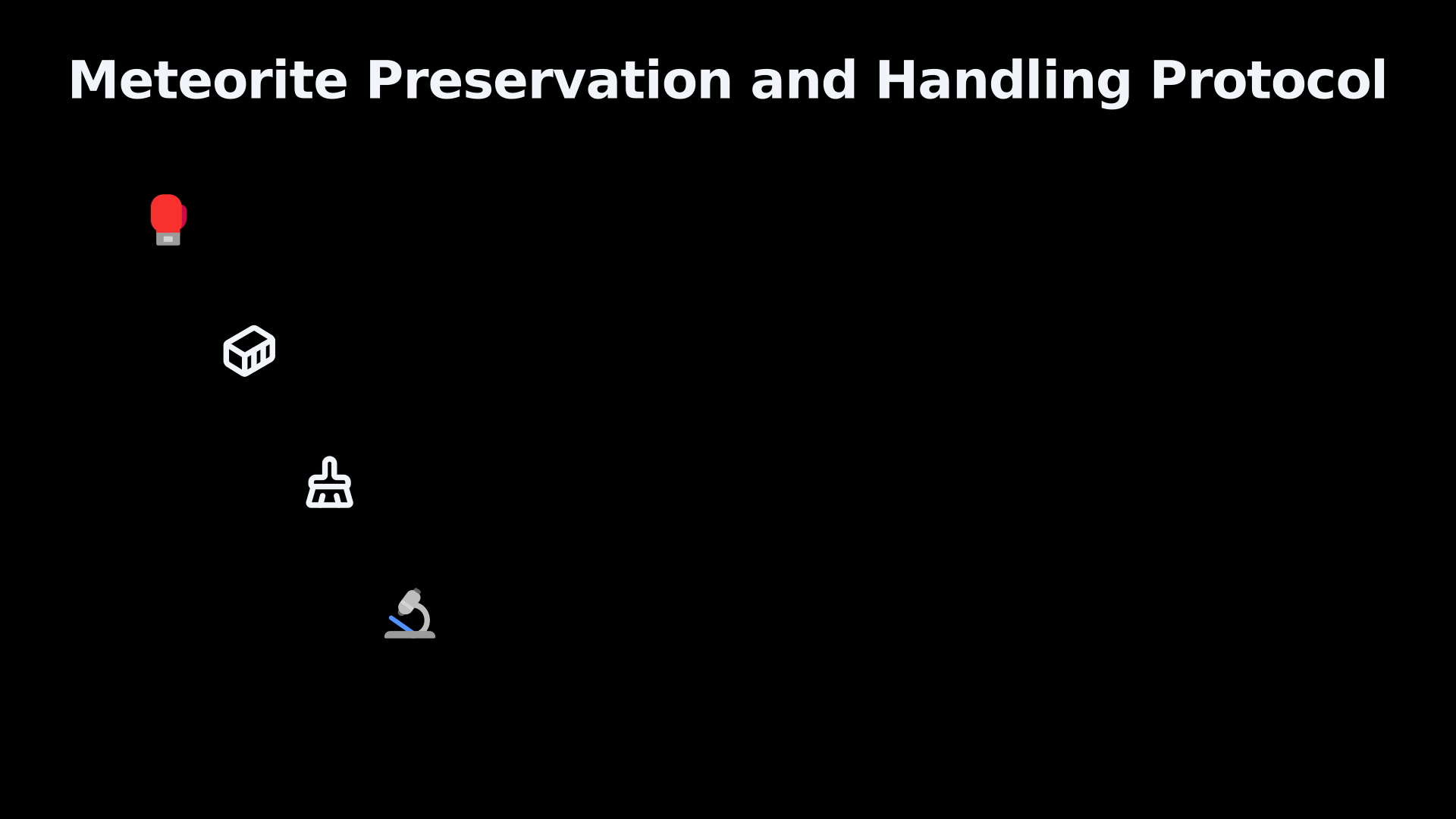
Human handling introduces another layer of complexity. Common contamination sources include:
- Fingerprints containing salts, skin oils and cosmetic residues.
- Steel tools depositing microscopic iron, chromium or nickel particles during cutting or scraping.
- Plastic bags, adhesive tapes and foam packaging releasing organic compounds.
- Lubricants, cleaning agents or preservatives applied by collectors.
- Dust, pollen and fibres transferred during transport or storage.
- Cross-contamination from previously examined specimens sharing the same workspace or equipment.
Many of these additions are detectable only in trace amounts, yet modern analytical instruments are sensitive enough to measure contaminants at extremely low concentrations. Without careful controls, a laboratory may accurately detect a chemical that genuinely exists on the specimen while incorrectly assuming it was present before recovery. Forensic laboratories therefore devote considerable effort to preventing contamination before interpreting analytical results.[nist.gov]nist.govTrace evidence | NISTTrace evidence | NIST…
A particular risk in alleged crash recoveries is selective sampling. If a collector cuts away the most unusual-looking section using conventional tools, the cutting process itself can embed metallic particles or alter heat-sensitive materials. Later analysis may identify these foreign elements without being able to distinguish whether they originated from the specimen or the recovery process unless untreated portions remain available for comparison.
Why untreated controls and storage records matter
The strongest safeguard against contamination is not a sophisticated instrument but a well-preserved comparison sample.
Investigators normally retain portions of recovered material exactly as found while documenting every subsequent examination. Alongside the object itself, they collect environmental controls such as nearby soil, vegetation and background dust from areas outside the apparent debris field. These controls allow laboratories to determine whether an unusual element is unique to the specimen or common throughout the recovery site.
Equally important are storage records. A complete history should identify:
- when the sample was collected;
- who handled it;
- every container it occupied;
- environmental conditions such as humidity or temperature;
- every occasion when material was removed for testing.
Chain-of-custody documentation cannot prevent contamination, but it helps investigators identify when contamination could have occurred and whether analytical results remain reliable. This principle is embedded in forensic evidence management because evidence that cannot be shown to have remained intact is much harder to interpret confidently.[NIST]nist.govEvidence Management | NISTEvidence Management | NIST…
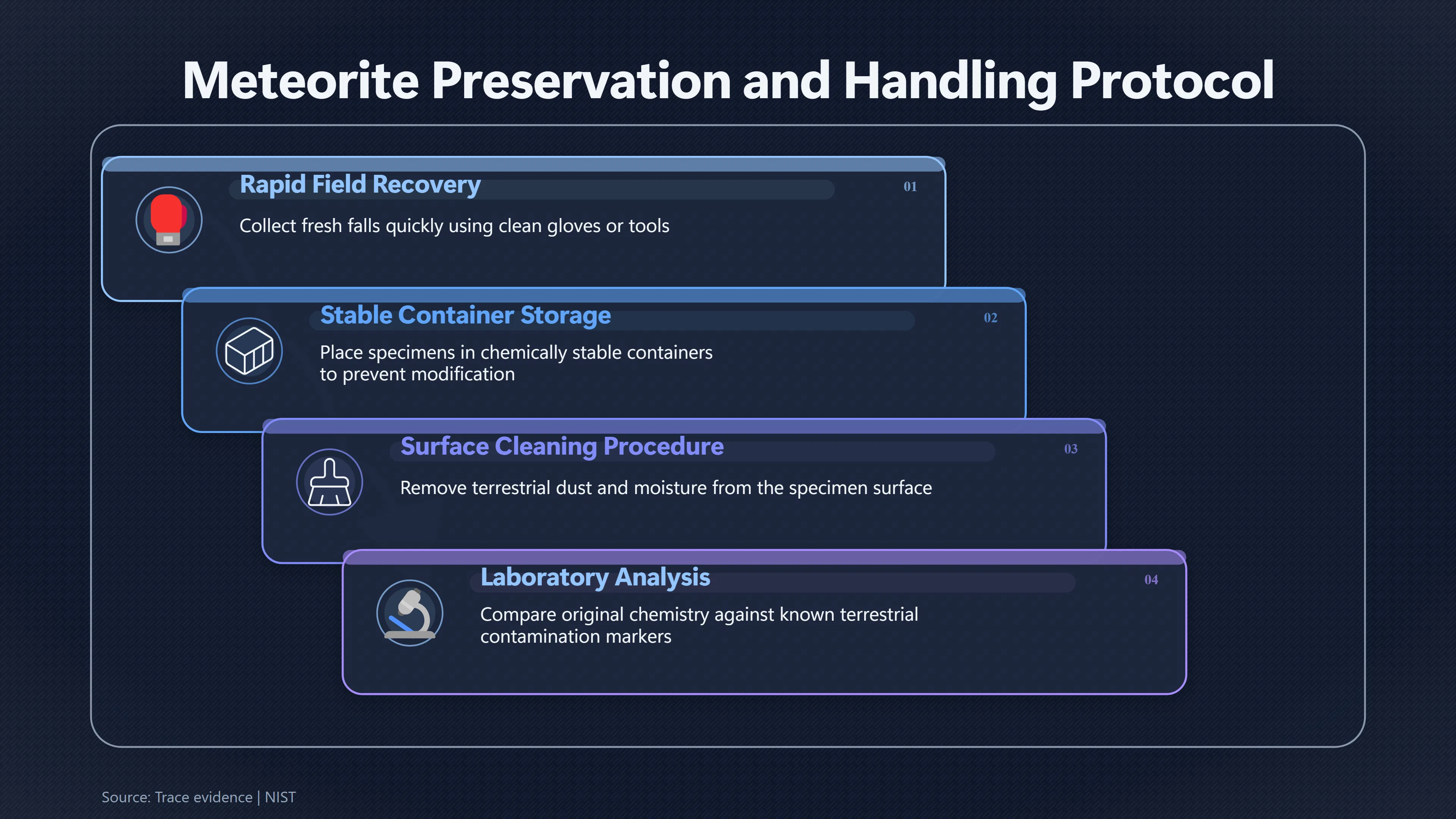
Planetary scientists apply remarkably similar standards to meteorites. Fresh falls are recovered rapidly using clean gloves or tools and stored in chemically stable containers because terrestrial exposure can modify minerals and organic compounds within a surprisingly short time.[ARES]ares.jsc.nasa.govARESARES | Meteorite Falls | How to Handle MeteoritesARESARES | Meteorite Falls | How to Handle Meteorites
Meteorites show how quickly Earth can alter unusual materials
Meteorites provide a useful comparison because their extraterrestrial origin is independently established, allowing scientists to observe how terrestrial contamination changes known space materials.
Studies of the Ivuna carbonaceous meteorite found that storage conditions influenced the formation of sulphate-bearing alteration products after recovery. Samples stored differently showed measurable differences produced by Earth’s atmosphere rather than by processes in space. Researchers concluded that hydrated meteorites should be kept in stable environments to minimise terrestrial modification because even museum curation history can influence later measurements.[arXiv]arxiv.orgTerrestrial modification of the Ivuna meteorite and a reassessment of the chemical composition of the CI type specimenSeptember 28…
NASA’s handling procedures for newly recovered meteorites reflect the same concern. Researchers recommend clean gloves, fresh aluminium foil or clean tools because the objective is to preserve the specimen’s original chemistry rather than protect people from the rock itself. Moisture, fingerprints and ordinary environmental exposure are treated as threats to scientific interpretation.[ARES]ares.jsc.nasa.govARESARES | Meteorite Falls | How to Handle MeteoritesARESARES | Meteorite Falls | How to Handle Meteorites
The rapid recovery of the Hillsborough meteorite illustrates the value of preserving pristine material. Prompt collection and controlled storage helped retain delicate minerals and organic compounds that are easily altered by atmospheric moisture and contamination, allowing scientists to distinguish original extraterrestrial features from later terrestrial changes.[NASA Science]science.nasa.govScience NASA Study of Pristine Meteorite Adds to Story of Ancient AsteroidsNASA ScienceNASA Study of Pristine Meteorite Adds to Story of Ancient Asteroids - NASA Science…
These examples demonstrate that if recognised meteorites require stringent contamination control to preserve their original characteristics, an alleged UFO fragment would demand at least the same level of evidence before extraordinary claims about its composition could be justified.
How laboratories separate original material from later alteration
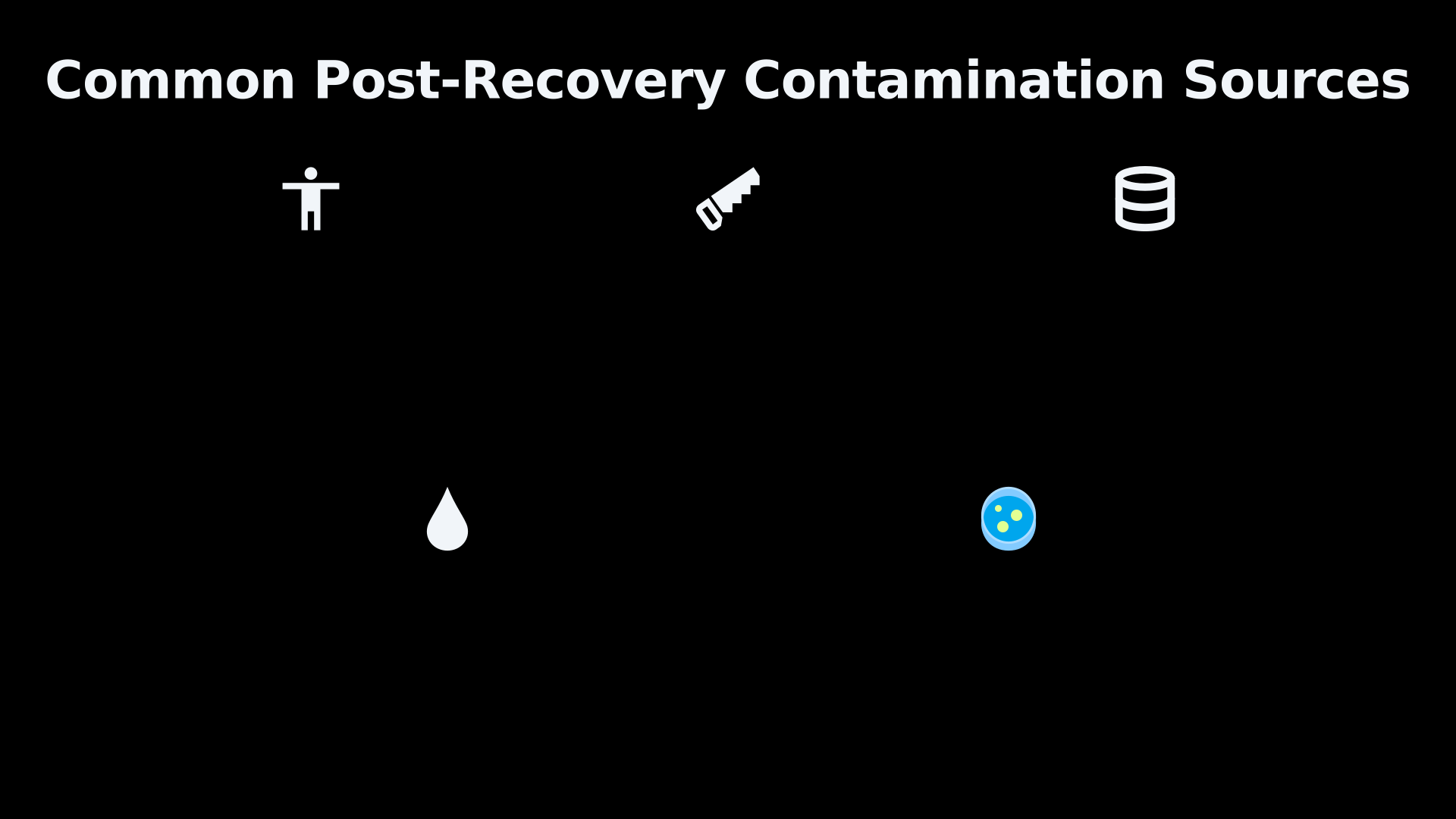
Modern laboratories rarely rely on a single measurement. Instead, they combine several complementary techniques to determine whether unusual chemistry belongs to the original specimen or only to its altered surface.
Typical approaches include:
- Surface versus interior analysis: Analysts compare freshly exposed interiors with weathered outer layers. Contaminants frequently concentrate on surfaces while original material extends throughout the object.
- Microscopic mapping: High-resolution imaging shows whether unexpected elements occur within the material’s crystal structure or merely coat cracks and corrosion products.
- Comparison with control samples: Soil, packaging residues and collection tools are analysed alongside the specimen to identify shared contaminants.
- Replicate testing: Independent laboratories repeat measurements using different instruments to confirm whether unusual signatures persist.
- Isotopic and mineralogical consistency: Genuine manufacturing or geological processes usually produce internally consistent chemical and structural patterns. Random contamination often appears patchy, superficial or inconsistent with the surrounding material.
These methods do not assume contamination occurred. Instead, they test competing explanations and determine which best matches the evidence. A genuinely unusual composition should remain detectable after contamination pathways have been excluded.
Why contamination is a critical alternative explanation
Claims about recovered UFO materials often emphasise an unexpected element, isotope ratio or microscopic structure. Yet contamination demonstrates why an isolated anomaly is rarely decisive.
A laboratory may correctly identify an uncommon alloy, manufacturing residue or chemical coating while still being unable to establish whether it formed before recovery or resulted from years of environmental exposure, storage or handling. Without untreated controls, documented recovery procedures and an unbroken chain of custody, contamination remains a plausible alternative explanation.
For that reason, unusual laboratory findings alone do not constitute convincing proof of a crashed non-human vehicle. The scientific question is not simply whether a specimen looks exotic, but whether investigators can show that its most remarkable properties genuinely belonged to it before recovery and have survived every subsequent stage of collection, transport and analysis.[nist.gov]nist.govEvidence Management | NISTEvidence Management | NIST…
Amazon book picks
Further Reading
Books and field guides related to Did the Sample Change After It Was Found?. Use these as the next step if you want deeper reading beyond the article.
Forensic Science: An Introduction to Scientific and Investiga...
Covering a range of fundamental topics essential to modern forensic investigation, the fourth edition of the landmark text Forensic Scien...
Practical Crime Scene Processing and Investigation
All too often, the weakest link in the chain of criminal justice is the crime scene investigation. Improper collection of evidence blocks...
Techniques of Crime Scene Investigation
"Techniques of Crime Scene Investigation is a staple for any forensic science library and is routinely referenced by professional organiz...
eBay marketplace picks
Marketplace Samples
Live-tested eBay searches with available results related to this page.
Selected fromUFO poster oneBay.co.uk.

Current eBay listing
UFO ABDUCTION OVER THE OCEAN -FRAMED WALL ART PAPER PRINT POSTER



Current eBay listing
FS02 VINTAGE UFO FLYING SAUCERS COMIC ADVERTISING A4 POSTER PRINT
Endnotes
1.
Source: nist.gov
Title: Trace evidence | NIST
Link:https://www.nist.gov/trace-evidence
Source snippet
Trace evidence | NIST...
2.
Source: nist.gov
Title: Evidence Management | NIST
Link:https://www.nist.gov/forensic-science/interdisciplinary-topics/evidence-management
Source snippet
Evidence Management | NIST...
3.
Source: ares.jsc.nasa.gov
Title: ARESARES | Meteorite Falls | How to Handle Meteorites
Link:https://ares.jsc.nasa.gov/meteorite-falls/how-to-handle-meteorites/
4.
Source: GOV.UK
Title: Forensic science activities: statutory code of practice
Link:https://www.gov.uk/government/publications/forensic-science-activities-statutory-code-of-practice-version-2/forensic-science-activities-statutory-code-of-practice-version-2-accessible
Source snippet
version 2 (accessible) - GOV.UK...
5.
Source: nist.gov
Title: Technical Tracks Errors | NIST
Link:https://www.nist.gov/adlp/2015-international-forensics-symposium/technical-tracks-errors
Source snippet
Technical Tracks Errors | NIST...
6.
Source: csrc.nist.gov
Title: Computer Security Resource Centerchain of custody
Link:https://csrc.nist.gov/glossary/term/chain_of_custody
Source snippet
NIST Computer Security Resource Centerchain of custody - Glossary | CSRC...
7.
Source: science.nasa.gov
Title: Science NASA Study of Pristine Meteorite Adds to Story of Ancient Asteroids
Link:https://science.nasa.gov/science-research/astromaterials/nasa-study-of-pristine-meteorite-adds-to-story-of-ancient-asteroids/
Source snippet
NASA ScienceNASA Study of Pristine Meteorite Adds to Story of Ancient Asteroids - NASA Science...
8.
Source: arxiv.org
Link:https://arxiv.org/abs/1909.13064
Source snippet
Terrestrial modification of the Ivuna meteorite and a reassessment of the chemical composition of the CI type specimenSeptember 28...
9.
Source: science.nasa.gov
Title: finds lunar regolith limits meteorites as source of earths water
Link:https://science.nasa.gov/science-research/astromaterials/nasa-finds-lunar-regolith-limits-meteorites-as-source-of-earths-water/
Source snippet
Finds Lunar Regolith Limits Meteorites as Source of Earth’s Water - NASA ScienceJanuary 23, 2026 — 4 min read NASA FINDS LUNAR REGOLITH L...
Published: January 23, 2026
10.
Source: GOV.UK
Title: www.gov.uk Draft code of practice (accessible)
Link:https://www.gov.uk/government/consultations/forensic-science-code-of-practice-version-2/draft-code-of-practice-accessible
11.
Source: GOV.UK
Title: www.gov.uk Contamination controls: scene of crime (accessible)
Link:https://www.gov.uk/government/publications/crime-scene-dna-anti-contamination-guidance/contamination-controls-scene-of-crime-accessible
12.
Source: nist.gov
Title: Video #1
Link:https://www.nist.gov/video/video-1-trace-evidence-collection-container-types-when-use-them-and-properly-sealing-evidence
13.
Source: GOV.UK
Title: www.gov.uk[Withdrawn] Forensic Science Regulator: Code of Practice (accessible)
Link:https://www.gov.uk/government/publications/statutory-code-of-practice-for-forensic-science-activities/forensic-science-regulator-code-of-practice-accessible
14.
Source: nist.gov
Link:https://www.nist.gov/spo/forensic-science-program/trace
15.
Source: nasa.gov
Title: NAS A Scientist Collects Bits of the Solar System from an Antarctic Glacier
Link:https://www.nasa.gov/solar-system/nasa-scientist-collects-bits-of-the-solar-system-from-an-antarctic-glacier/
16.
Source: science.nasa.gov
Title: cleaning a martian meteorite
Link:https://science.nasa.gov/resource/cleaning-a-martian-meteorite/
17.
Source: nasa.gov
Title: Infamous Meteorites
Link:https://www.nasa.gov/podcasts/houston-we-have-a-podcast/infamous-meteorites/
18.
Source: nist.gov
Title: trace contraband detection
Link:https://www.nist.gov/programs-projects/trace-contraband-detection
19.
Source: astrobiology.nasa.gov
Title: asteroid served up custom orders of lifes ingredients
Link:https://astrobiology.nasa.gov/news/asteroid-served-up-custom-orders-of-lifes-ingredients/
20.
Source: nist.gov
Title: metrological traceability
Link:https://www.nist.gov/metrology/metrological-traceability
21.
Source: ntrs.nasa.gov
Link:https://ntrs.nasa.gov/citations/20040062232
22.
Source: ntrs.nasa.gov
Link:https://ntrs.nasa.gov/citations/19990092222
23.
Source: ntrs.nasa.gov
Link:https://ntrs.nasa.gov/citations/20000034793
24.
Source: strbase-archive.nist.gov
Link:https://strbase-archive.nist.gov/dabqas.htm
25.
Source: GOV.UK
Title: www.gov.uk DN A contamination controls: laboratory (accessible)
Link:https://www.gov.uk/government/publications/dna-contamination-controls-laboratory/dna-contamination-controls-laboratory-accessible
26.
Source: csrc.nist.rip
Title: ripchain of custody
Link:https://csrc.nist.rip/glossary/term/chain_of_custody
Additional References
27.
Source: youtube.com
Link:https://www.youtube.com/watch?v=EEMJoZvN-dQ
Source snippet
Professor Garry Nolan & Ross Coulthart: Full interview | UFO UAP News...
28.
Source: youtube.com
Title: Professor Garry Nolan & Ross Coulthart: Full interview | UFO UAP News
Link:https://www.youtube.com/watch?v=XR0JtbuLhPo
Source snippet
ANALYSING UFO EXPERIENCERS' BRAINS & ANOMALOUS MATERIALS - Garry Nolan PHD #62...
29.
Source: youtube.com
Title: Garry Nolan: UFOs and Aliens | Lex Fridman Podcast #262
Link:https://www.youtube.com/watch?v=uTCc2-1tbBQ
Source snippet
The CIA's UAP & Alien Research! 'Their Brains Looked Fried' | Stanford's Garry Nolan...
30.
Source: ojp.gov
Link:https://www.ojp.gov/ncjrs/virtual-library/abstracts/trace-evidence-recovery-guidelines
31.
Source: youtube.com
Title: Garry Nolan “Testing Materials Recovered From [UFO Crashes]({{ ‘ufo-crashes/’ | relative_url }})”
Link:https://www.youtube.com/watch?v=jlMEZE5f2j4
Source snippet
Garry Nolan: UFOs and Aliens | Lex Fridman Podcast #262...
32.
Source: nij.ojp.gov
Title: developing reliable methods microbial fingerprinting soil evidence collection
Link:https://nij.ojp.gov/library/publications/developing-reliable-methods-microbial-fingerprinting-soil-evidence-collection
33.
Source: firstaidforfinds.org
Link:https://www.firstaidforfinds.org/examination-cleaning
34.
Source: youtube.com
Title: ANALYSING UFO EXPERIENCERS’ BRAINS & ANOMALOUS MATERIALS
Link:https://www.youtube.com/watch?v=9KORTynxY-g
35.
Source: nij.ojp.gov
Title: chain custody typical checklist
Link:https://nij.ojp.gov/nij-hosted-online-training-courses/law-101-legal-guide-forensic-expert/sources-scientific-evidence/testing-or-evaluating-evidence-and-writing-reports/chain-custody-typical-checklist
36.
Source: pubmed.ncbi.nlm.nih.gov
Link:https://pubmed.ncbi.nlm.nih.gov/30120344/